SAMYANG 24 mm F1 – Some of these have flaws
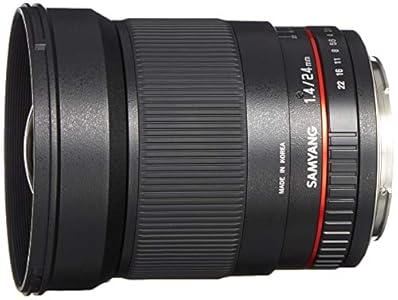
Great wide angle lens for astrophotography. Seriously blows my canon f4 17-40mm l lens away in terms of light throughout and coma. From f2 oneatds there’s really no coma. 4 you’ll still see a little around the edges of a full frame camera (i use a canon 6d). Docked one mark as it’s not autofocus, which means you have to be careful with manual focus for landscapes and star shots. Also note it’s not weather sealed, so be careful in humid conditions. But for the price and starscapes it’s a fantastic lens.
Don`t remember so nothing unfavourable.
Super sharp, lovely colours and very smooth bokeh. Takes a bit of getting used to being a manual lens but all in all, extremely pleased in combination with a 5dsr. Landscapes at the moment and hoping for some milky way shots later. Delivered in pristine condition with english instruction manual and pouch.
There’s a real trade-off between price/performance and ease of use with this lens. Read on to understand before purchase. Pros- well made- optically of good quality- half the price of the canon equivalentcons- manual focus- manual exposure control- lens does not automatically show ‘wide open’ viewfinder image- exif data will not include the aperture (used by editing software)samyang is a new name for slr camera lenses, being a south korean company. This lens is available for several brands of camera, with varying levels of communication passed to the camera body. This canon fit lens has no communication with the body at all, the headline missing function therefore being auto-focus but there are other functions that we take for granted nowadays that are not possible using this lens. Presumably this was done to keep costs down by not having to license canon’s mount technology. The most obviously attractive feature about the lens is the cost – it is less than half the price of the equivalent canon l series 24mm f1. If you had a desire for that lens but can’t justify the expense then this could be an option but consider that you will have to adjust the way you work. For landscape photography on a tripod where speed is not a particular issue, this could be a decent purchase.
First impressions are that this is a well made, good quality lens; although quite large at around 102mm long and not light at 680g. In use the initial impressions are confirmed, it is capable of taking good quality, sharp pictures. However, that is not the end of the story, for while it is capable of impressive results achieving them is another matter. This particular model is listed for a canon, (although the lens instructions included in the box contain information on use with pentax, sony, konica minolta, and four-thirds cameras) here it used with a canon eos camera. The instructions suggest manually selecting the aperture and setting the camera to m, or with some canon to av where the camera will automatically set the shutter speed. In practice i found using the av setting worked well in good light, but not well in poor light; however setting the camera to p achieved good results with poor light; however further experiment is no doubt needed to get the best out of it. As most of my photography is taken with aperture the priority this works well for me. Focusing is another matter though, this has to be set manually. This is nothing unusual, when i started out in photography it was really the only way, yet i do not find it easy with this lens. The problem may partly be mine as i now have to contend with varifocal spectacles, troublesome a the best of times but a real problem when looking through a viewfinder (on a camera with a large rear viewing screen this would no doubt be a lot easier); so accurate focusing i found very difficult – add to that the need to view initially at full aperture so as to be able to see well and then having to stop down to the chosen aperture the whole process can become tiresome.
I had read that quite a few astrophotographers had noticed that the images had a defect at one side. I had taken daylight photographs and had not noticed anything odd but the first photo of stars showed clear distortion to the right side of the image. People sent these lenses back and get another. . You may not get a good one initially. I’ve sent mine back and ordered a 14mm f2. Zoom in to the attached image and look at the left compared with right.
- Superb for astrophotography at f2 onwards
- Bought specially for astrophotography this lens is superb. Some
- Super sharp, lovely colours and very smooth bokeh.
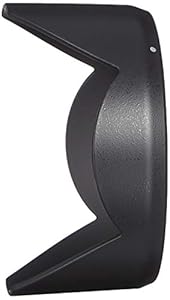
I have just done a few tests, no real night shots, which is why i bought it. Using focal software, in theory the quality is poor under f2. 2in practice, it compared favorably (at f2. 8) with a much more expensive 25mm lens. On nikon cameras the electronic contacts are great for using camera controlled aperture. Infinity marker is a bit off and the build quality could be a bit higher.
Bought specially for astrophotography this lens is superb. Some glorious milky way shots from devon.
Really impressed with this lens, wanted a manual focus, fast lens for timelapse/aurora and astrophotography as well a landscape lens,i tried it out locally on a canon 40d and got great results of milkyway. Can’t wait to try it on a full frame 6d.
Features of Samyang 24 mm F1.4 Manual Focus Lens for Canon
- Make sure this fits
by entering your model number. - Ideal for landscapes, interiors, street photography, low-light photography and general photography
- Constructed with hybrid aspherical lenses for outstanding, sharply defined images
- Features the latest generation multi-layer anti-reflection ultra multi-coating (UMC) to minimise flare and ghosting
- Minimum focusing distance of 9.84″ for enhanced close-up shots
From the manufacturer

Samyang 24mm F1.4 ED AS IF UMC
Samyang’s creative innovation impresses the world ever more
- Samyang 24mm F1.4 ED AS IF UMC is a high quality, fast aperture, prime wide angle lens for full frame or APS-C sized sensors.
- It is ideal for full-frame cameras, constituting a high-quality wide-angle lens perfect for shooting street, landscape and architecture even in low light conditions.
- The sharpness is excellent, even at the edges of the frame at wide apertures, and the fast F1.4 aperture is able to give a narrow depth of field when needed.
|
|
|
|
|
|---|---|---|---|
Bright F1.4 ApertureWith a bright aperture of F1.4, it maintains higher shutter speeds in indoor and low light conditions and ensures instant response while creating an out-of-focus effect to make the subject stand out. |
Ultra Multi CoatingBy reducing the impact of flare and ghosting effects in your pictures while ensuring excellent image quality and contrast from the centre to the periphery, it offers crystal clear, sharp image quality. |
Beautiful BokehFeaturing 8 rounded blades, it adds an artistic touch to your pictures and creates a sense of soft dimension with incredible bokeh, perfect for out-of-focus portraits and night city landscapes. |
Aspherical LensWith minimal spherical aberration and distortion, you can take pictures with incredible precision. |


Technical Information
- Image Sensor Size – Full Frame
- Focal Length – 24mm
- Maximum Aperture – f/1.4
- Filter Diameter – 77mm
- Minimum Focus Distance – 0.25m
- Focus Type – Manual
Make sure this fits
by entering your model number.
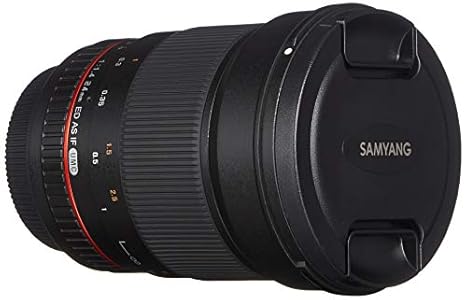
Ideal for landscapes, interiors, street photography, low-light photography and general photography

Constructed with hybrid aspherical lenses for outstanding, sharply defined images
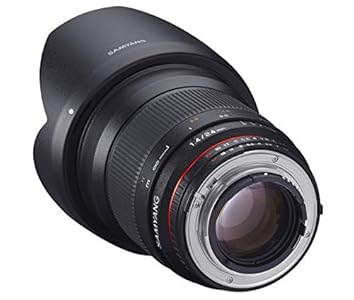
Features the latest generation multi-layer anti-reflection ultra multi-coating (UMC) to minimise flare and ghosting
Minimum focusing distance of 9.84″ for enhanced close-up shots
The post SAMYANG 24 mm F1 – Some of these have flaws appeared first on Lenszone.


Comments
Post a Comment